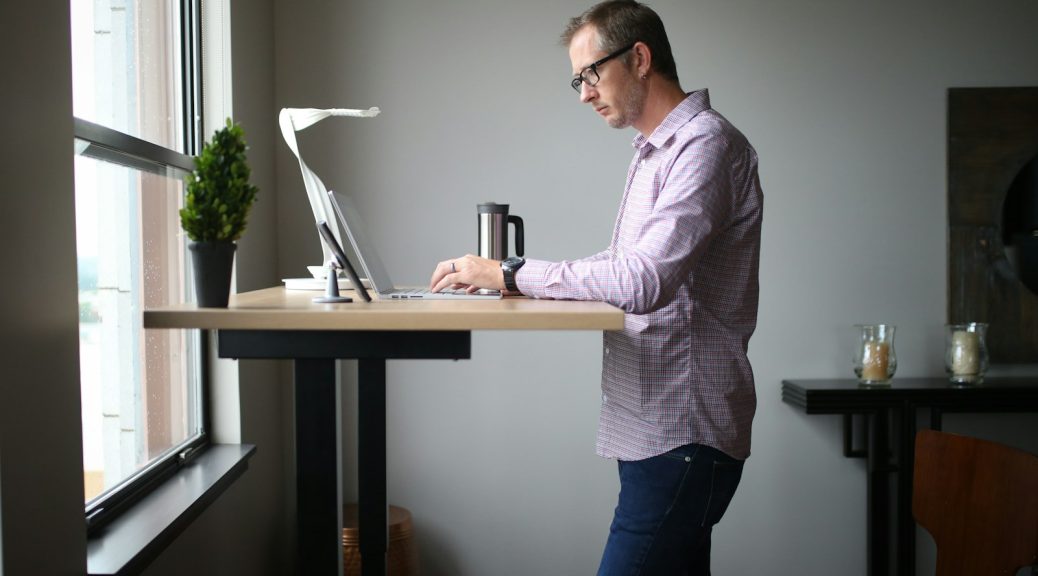
Even if you exercise regularly, long unbroken stretches of sitting are worth breaking up.
Quick points
- Australia’s movement guidelines recommend limiting sedentary time and breaking up long periods of sitting as often as possible.
- Replacing sitting with activity of any intensity is a step in the right direction.
- Short, regular breaks are easier to fit in than long ones.
- Standing desks can help, but changing position and moving matters more than standing all day.
Many of us spend most of the working day in a chair, then sit again to travel home and relax in the evening. Australia’s 24-hour movement guidelines recommend limiting the time spent sitting and breaking up long periods of sitting as often as possible.
Small changes that add up
| Situation | Try this |
|---|---|
| Phone calls | Stand up or walk while you talk |
| Meetings | Suggest a walking meeting, or stand for part of it |
| Messages to colleagues nearby | Walk over and talk instead |
| Breaks | Take a short walk instead of scrolling at your desk |
| Lunch | Eat away from your desk and walk for part of the break |
| Getting to work | Get off public transport a stop early or park further away |
Build movement into your desk routine
- Set a reminder to stand up and move every 30 to 60 minutes.
- Refill your water bottle often; the walk to the tap counts.
- Use a printer or bin that’s a short walk away.
- Do a few calf raises or stretches while you wait for the kettle to boil.
Training tip
Link movement to things that happen anyway. Every time you finish a task or a call, stand up before you start the next one.
Standing desks
Sit-stand desks make it easier to change position during the day. If you use one, alternate between sitting and standing rather than standing all day, and keep moving in both positions. Set the height so your elbows are at about 90 degrees and the top of your screen is around eye level.
Outside work hours
The guidelines also suggest replacing sedentary behaviour, including recreational screen time, with any physical activity. A walk after dinner, standing up during ad breaks or some gardening are all simple swaps. Our guide to Australia’s movement guidelines shows how this fits into a whole day.
Safety first
If you have back, neck or joint pain at work, talk to your GP or a physiotherapist, and ask your employer about a workstation assessment.
Start with one change
Choose one swap, such as standing for every phone call, and stick with it for a couple of weeks before adding another. Our guide to staying motivated has more tips for making changes stick.
Questions we get
Is standing all day better than sitting?
Not necessarily. Standing still for long periods has its own downsides. Changing position and moving regularly is the goal.
How often should I get up?
The guidelines don’t set a specific interval, but many people find a reminder every 30 to 60 minutes is a practical way to break up sitting.
Does exercise cancel out sitting?
Regular exercise is valuable, but the guidelines treat sitting time as a separate habit worth reducing, even for people who are active.
This article is general information, not personalised medical or fitness advice. Talk to your GP, a physiotherapist or an accredited exercise physiologist before starting a new exercise program if you have a health condition or injury, are pregnant or haven’t been active for a while. In an emergency, call 000.