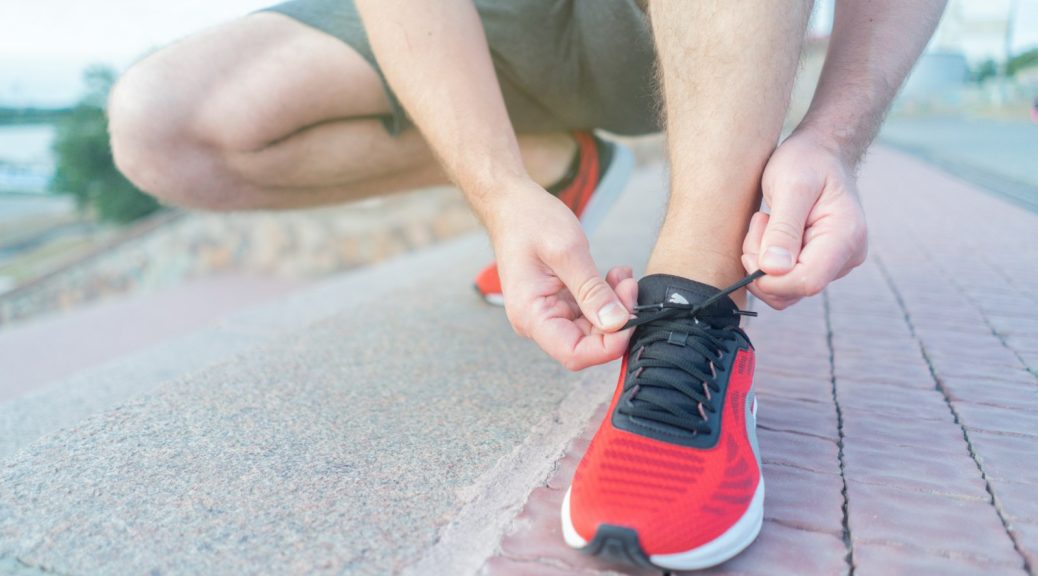
Most beginner injuries come from doing too much, too soon. A gradual approach keeps you moving.
Quick points
- Increasing the amount or intensity of exercise too quickly is a common cause of injury.
- Build up gradually, warm up, wear suitable shoes and include rest days.
- Sharp pain, swelling, or pain that changes the way you move are signs to stop.
- For sprains and strains, St John Ambulance first aid guidance uses RICE and advises avoiding HARM.
Starting a new exercise routine is exciting, and that enthusiasm can lead to doing too much in the first few weeks. Your fitness can improve fairly quickly, but tendons, bones and joints take longer to adapt to new loads.
Common beginner problems
| Problem | Often linked to |
|---|---|
| Shin pain | Increasing running too quickly, hard surfaces |
| Knee pain | Sudden increases in running, squatting or stairs |
| Sore heels or arches | Lots of walking or running in unsupportive shoes |
| Lower back strain | Lifting with poor technique or too much weight |
| Sprained ankle | Uneven ground, tired legs |
Ways to lower your risk
- Build up gradually. Change one thing at a time: how long, how often or how hard. Our walk-jog plan is an example of steady progression.
- Warm up. A few minutes of easy movement prepares your body. See our warm-up guide.
- Wear suitable shoes. Choose comfortable, supportive shoes for your activity and replace them when they’re worn out.
- Learn good technique. Start with lighter weights or easier versions and focus on form.
- Schedule rest. Recovery days let your body adapt.
Training tip
Use a simple traffic-light check. Mild aches that ease as you warm up are green. Pain that lingers after exercise is amber, so ease back. Pain that gets worse during exercise or changes how you move is red: stop.
First aid for sprains and strains
For a minor sprain or strain, St John Ambulance first aid guidance uses RICE:
- Rest the injured part.
- Ice: apply an ice pack or cold pack for 15 minutes every 2 hours for the first 24 hours, then for 15 minutes every 4 hours for the next 24 hours. Wrap ice in a cloth rather than putting it directly on your skin.
- Compression: apply a firm compression bandage that extends well beyond the injury.
- Elevation: raise the injured part.
It also advises avoiding HARM: heat, alcohol, running or other exercise of the injured area, and massage.
Health warning
Seek medical help if you can’t put weight on the injured limb, there’s significant swelling or a change in shape, the pain is severe, or you heard a crack. If in doubt, treat the injury as a possible fracture. In an emergency, call 000.
Getting back to exercise
Once pain and swelling have settled, return gradually, starting with gentle movement and a lighter version of your usual routine. If pain keeps coming back, see a GP or physiotherapist rather than pushing through.
Questions we get
How quickly can I increase my training?
Small steps are safest. Increase only one thing at a time, such as how long, how often or how hard you exercise, and hold steady for a week or two before increasing again.
Should I keep going through pain?
No. Mild muscle soreness is normal, but pain that’s sharp, in one spot or getting worse is a sign to stop and rest.
When should I see a physio?
If pain lasts more than a few days, keeps coming back, or affects how you walk or move, a physiotherapist or GP can work out the cause and help you return to exercise safely.
This article is general information, not personalised medical or fitness advice. Talk to your GP, a physiotherapist or an accredited exercise physiologist before starting a new exercise program if you have a health condition or injury, are pregnant or haven’t been active for a while. In an emergency, call 000.